
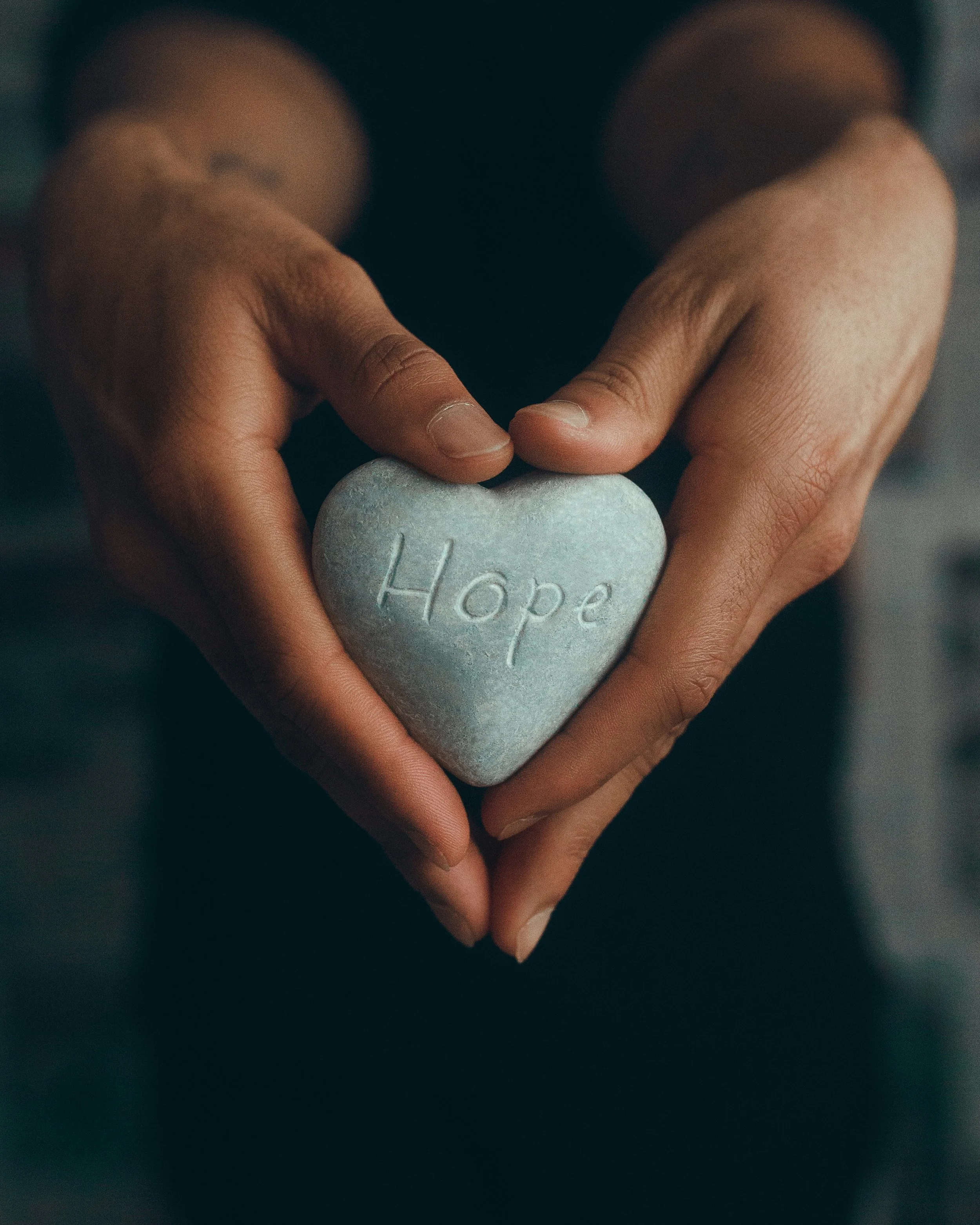
Hope Between Breakfast and Supper
Some say hope is dangerous, or maybe worse, an illusion. Francis Bacon called hope “a good breakfast, but a bad supper.” Fine to start off with but not enough to see you through the day. All respect to Mr. Bacon, but I need to disagree.
If, as Shakespeare writes, our lives are played out on the world’s stage, then hope occupies a starring role. It is a key cast member throughout the twists and turns of our ages, and exists within each of us whether we recognize it or not. That’s a good thing because life is often a struggle, and hope is a powerful force for change.
No matter what we start out expecting, a lot can happen between the beginning and end of anything—be it a meal, a day, or a lifetime. Linda Ellis writes of this space as The Dash—all the time, choices, feelings, and memories that unfurl between a first moment and the last. Sometimes, like Ellis writes, that dash connects the beginning of a life to its end.
It’s important to remember, too, that each of us treads multiple dashes every day. They’re there between wedding vows and divorce papers, the first chemo treatment and the news you’re cancer free. A dash connects the first day of school to the last, a first word to a graduation speech, and the spring to the fall and back again—and again.
But dashes also find themselves between the drip of a coffeemaker and the last sip, the starting page of a book and The End. The first note of a song, the first step on a trail, the first bud on a lilac, and all that follows after. And, not to forget Mr. Bacon, each year there are 365 dashes between breakfast and supper.
More Than Wishful Thinking
Each dash envelops joy, grief, tragedy, laughter, sorrow, and yes, even in the darkest moments, hope. Although, whether we can find hope or not depends a lot on how we define it.
We already know Francis Bacon’s thoughts on the subject. Benjamin Franklin took things further, declaring, a little dramatically, “He that lives on hope will die fasting.” Seems Ben wasn’t a big fan. Hope for him wasn’t only a bad supper, it was best kept off your plate altogether. Food analogies aside, Franklin and Bacon both agreed on the hopeless nature of hope.
Unfortunately, to this day, hope still often gets a bad rap. Hard to define, misunderstood, sometimes seen as the lazy way out: sitting back and hoping things get better instead of doing something about it.
But, what if the hoping was the doing?
Plenty of research shows hope to be much more than simply wishful thinking. Charles R. Snyder built a career on studying the positive influence of hope on quality of life measures like anxiety, depression, physical health, self-confidence, academic success, and more. Others have similarly found hope to directly impact a person’s motivation, frame of mind, resilience to change, and ability to withstand tragedy.
Joanna Macy and Chris Johnstone speak to this in their book, Active Hope: How to Face the Mess We’re in Without Going Crazy. Elin Kelsey does this, too, in Hope Matters: How Changing the Way We Think Is Critical to Solving the Environmental Crisis, and How to Be Hopeful Empowering Practices to Overcome Despair and Act for Climate Justice.
In each case, hope is about action. It’s about doing, not wishing.
The Hope That Moves Us
I, too, ground my view of hope in action. Taking inspiration from Snyder, Macy, Johnstone, Kelsey, and others, hope for me is a tangible and powerful force capable of—and necessary for—moving us through our dashes, for sustaining us between the breakfasts and suppers of our lives.
As you’ve likely noticed, there’s quite a contrast between Franklin and Bacon’s declarations of hope as dangerous, even deadly, and this other view of hope as essential. Nevertheless, I feel I’m in good company.
Emily Dickinson, for one, would have had something to say about Mr. Franklin’s description. Famously, Dickinson saw hope perched within our souls, ever present, ready to carry us through life’s storms. Wendell Berry, too, embraced hope. Although, he recognized it’s not always easy to find and never truly grows until we act on it.
It is this sense of action that drives hope beyond the limits of mere wishful thinking to become the powerful change agent it is. However, different ways of seeing hope can make it hard to recognize even when it’s already inside us.
So, how do we know hope is there? And, what do we do with it once we find it?
Recognizing Hope Within Ourselves
Charles R. Snyder developed his Hope Scale for measuring hope, but there are other ways, too. Hope is about what motivates us to strive for change, what we believe we can accomplish, the plans that will get us there, and the agency to act on those plans. If these exist, then so does hope.
Try asking yourself some of the questions from my HOPE Framework below and see how hope shows up for you:
Motivation: What Moves You Toward Change?
What do you see around you that you wish was different?
Why is this important to you? To your family? Your community?
In what ways would life be better with this change?
What is motivating you to create change?
Beliefs: What Helps You See Possibility?
What do you imagine needs to happen for this change to become reality?
What or who could help?
What examples are there of others creating this kind of change?
What helps you believe this change is possible?
Plans: How Will You Get There?
What is a good first step?
Who might you talk to? Collaborate with? Enlist?
What is your ultimate goal? How will you know when you’ve created the change you want?
Now, work backwards to your first step to create a plan for how to get there.
Agency: What Gives You the Power to Act?
Who has traditionally controlled this issue? Who holds the power?
What is needed to change those dynamics? Who can help?
What power and influence do you already have? Think collectively. Together is better.
How can you build the agency needed to act on your plans?
Letting Hope Fly
How do we measure hope? One way is through our motivations, our beliefs, our plans, and our actions. This is the kind of hope scholars and poets alike have recognized.
This is hope based in action.
It’s about seeing ourselves as our own changemakers. Our own sources of hope. Because, if hope is already inside us, things are never hopeless.
If you’ve made it to the end of this blog, then I hope you already know that. I hope you see you're already well on your way to making a difference.
The truth is, hope has been a part of you all along, waiting. Perched on your soul. Ready to fly.