
Why Hope Matters
While climate change can feel enormous, it can also be deeply personal. Add on politically charged, and climate change becomes especially hard to talk about. Yet, communities and classrooms cannot respond fully to the climate crisis without also addressing how people experience it. Fear, grief, anger, uncertainty, and hope all shape whether people engage, withdraw, connect with each other, or take action.
Young people are especially impacted. In a *national study of Americans ages 16–25, 57% reported feeling very or extremely worried about climate change. Many wanted more opportunities to talk about it, yet felt their concerns were often ignored or dismissed.
Climate conversations are not easy. Yet, talking about climate change can also be an opportunity to build trust, strengthen community, and help people imagine ways forward together.
The HOPE Framework can help.
What Is the HOPE Framework?
The HOPE Framework is a practical approach for helping communities and classrooms navigate climate emotions, build agency,
and create meaningful change.
HOPE stands for Healing Opportunities for Processing Eco-Grief. The framework recognizes the fear, grief, anger, and loss associated with climate change while keeping possibility, connection, and action at the center of the conversation.
In this framework, hope is not passive optimism or the blind belief that everything will work out. It is built by recognizing what needs to change, believing that change is possible, identifying pathways forward, and developing the agency to act.
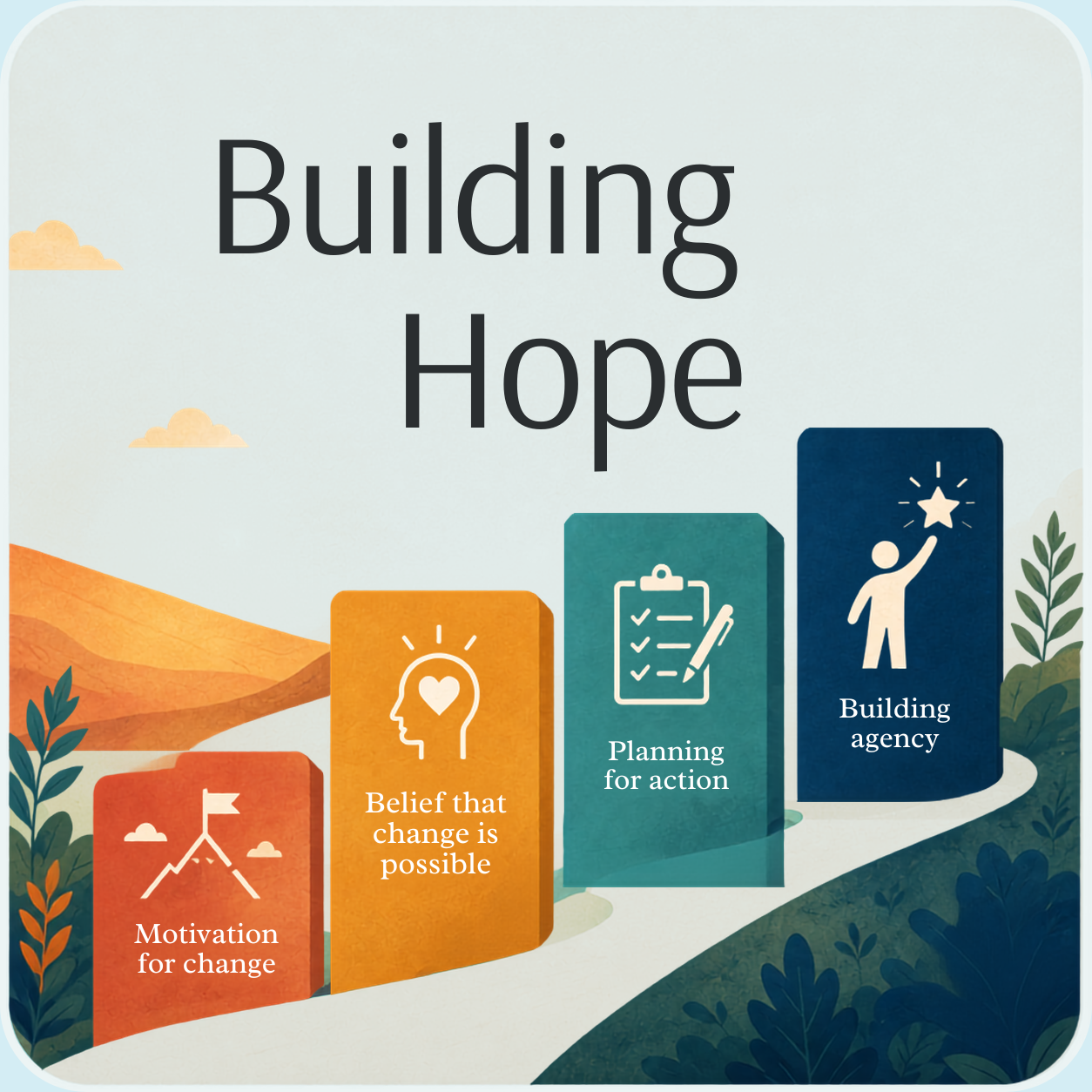
The framework organizes climate conversations around four building blocks:
Motivation for change: Recognizing a problem, loss, or injustice exists and becoming motivated to seek change.
Belief that change is possible: Identifying evidence, examples, and shared strengths that make change feel achievable.
Planning for action: Imagining possible solutions and identifying practical steps and pathways forward.
Building agency: Fostering the confidence, skills, relationships, and opportunities needed to take action.
Together, these elements help transform climate grief into hope grounded in possibility and collective action.
Putting HOPE into Practice
The HOPE Framework can guide a single conversation, a lesson or story discussion, a community program, or a longer-term engagement initiative. It can help participants:
Name and explore their emotional responses to climate change.
Listen to and learn from one another’s experiences.
Identify the people, places, and possibilities they care about.
Recognize examples of change already happening.
Imagine individual and collective responses.
Choose meaningful and achievable actions.
The framework is adaptable across ages, settings, and levels of climate knowledge. It does not demand one correct action. Instead, it helps people identify pathways that are meaningful, appropriate, and connected to their own communities.
HOPE Across Ages and Communities
The HOPE Framework can be used wherever people are learning about, talking about, or responding to climate change:
Schools and youth programs can use it to explore climate emotions, analyze stories, envision possible futures, and support student-led action.
Libraries and cultural organizations can use it to guide book discussions, exhibits, climate storytelling programs, film screenings, and intergenerational conversations.
Community and nonprofit organizations can use the Framework to support listening sessions, workshops, leadership development, and locally grounded climate initiatives.
Cities and sustainability teams can use it to make public engagement more responsive to residents’ concerns, experiences, and ideas for action.
Older adults and intergenerational groups can use it to share memories, consider changes to familiar places, exchange knowledge, and contribute their experience to community resilience.
Whether used with youth, older adults, educators, families, or entire communities, the HOPE Framework creates space to acknowledge what climate change is costing us while building the relationships, imagination, and agency needed to move forward.
Explore this handy 1-pager for more examples of how the HOPE Framework can benefit your community.
*Lewandowski, R. E., Clayton, S. D., Olbrich, L., Sakshaug, J. W., Wray, B., Schwartz, S. E., ... & Van
Susteren, L. (2024). Climate emotions, thoughts, and plans among US adolescents and young
adults: a cross-sectional descriptive survey and analysis by political party identification and self-
reported exposure to severe weather events. The Lancet Planetary Health, 8(11), e879-e893.