
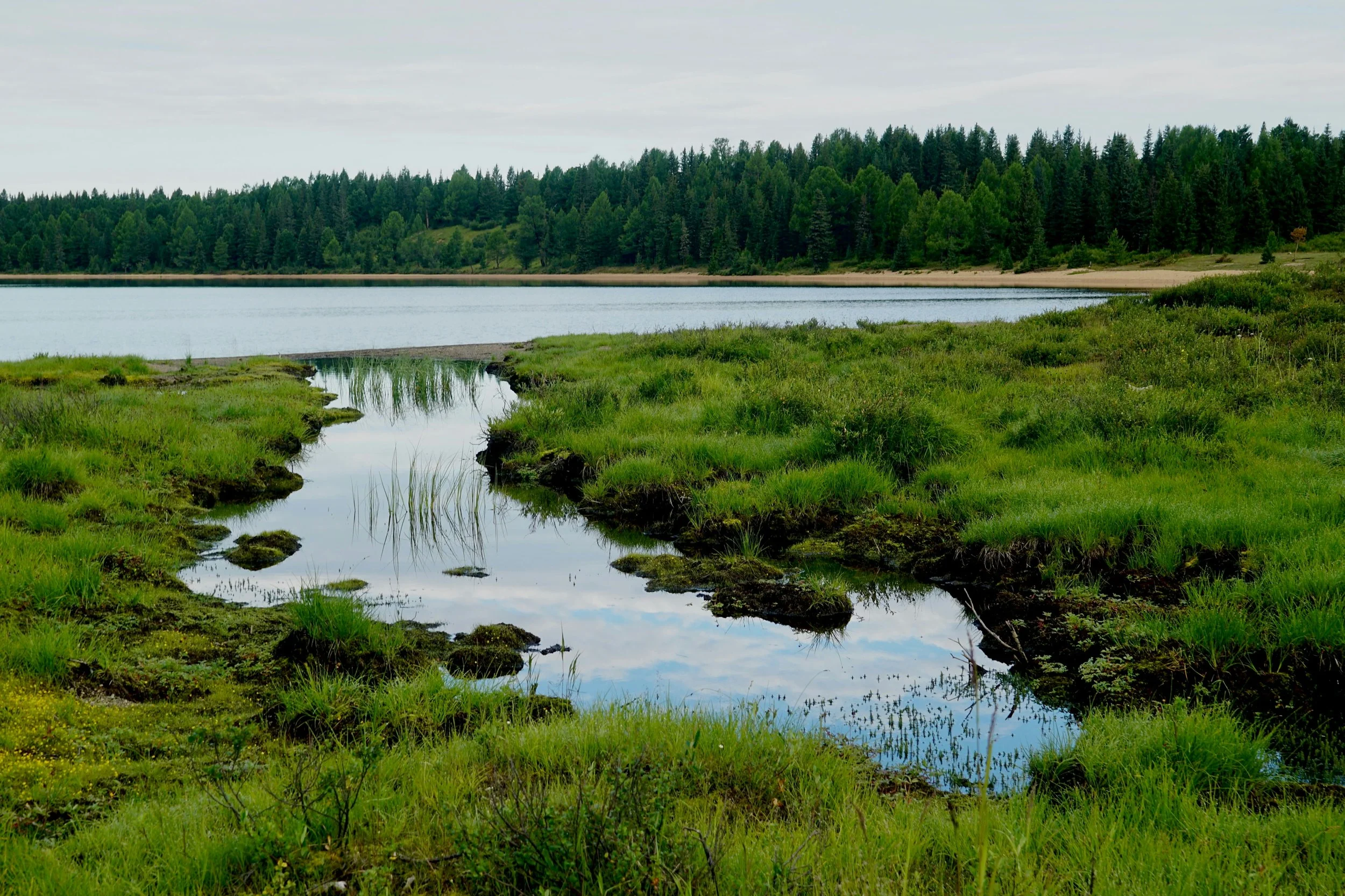
When people hear “carbon capture,” they often picture industrial equipment: pipes, compressors, tanks, injection wells, and monitoring systems. But some of the most familiar carbon capture systems are living systems. Trees, prairies, wetlands, croplands, and soils all move carbon from the atmosphere into biomass and soil.
For communities, this form of carbon capture is better understood as land stewardship.
Biological carbon sequestration can be powerful because it can do more than store carbon. A restored prairie can reduce mowing, support pollinators, improve infiltration, and build soil carbon. A healthier urban forest can lower surface temperatures, intercept stormwater, improve air quality, and make neighborhoods more walkable. Wetland protection and restoration can store carbon while reducing flood risk, improving water quality, and supporting wildlife.
EPA’s national greenhouse gas inventory includes carbon dioxide removals from “sinks,” including the uptake and storage of carbon in forests, vegetation, and soils. EPA also notes that the U.S. land sector functions as a net sink in national greenhouse gas accounting. That national accounting frame matters because it shows that land is already part of the climate system. The question for local governments is how to protect and improve that function without overclaiming it.
The IPCC describes Agriculture, Forestry, and Other Land Use as a sector with significant mitigation opportunities. It also emphasizes that land-based mitigation can deliver important co-benefits, including biodiversity conservation, food, wood, and other renewable resources. But the IPCC also warns that poorly implemented land mitigation can create trade-offs with habitat, adaptation, biodiversity, food production, and other land needs.
Biological carbon work should not be reduced to a simple tree-counting exercise.
A city climate plan should not assume that planting trees anywhere is automatically the best land-based carbon strategy. In some places, urban tree canopy expansion may be the right approach. In others, prairie restoration, savanna restoration, wetland protection, riparian buffers, soil health practices, or turf-to-native conversion may be a better fit. The right strategy depends on the local ecosystem, community need, land ownership, maintenance capacity, and climate risk.
Biological carbon has limits
The first limit is time. A solar array can reduce electricity emissions as soon as it is operating. A tree may take decades to reach its full carbon storage potential. A prairie may build soil carbon gradually. A wetland restoration project may take years to stabilize.
The second limit is permanence. Carbon stored in living systems can be released again through fire, drought, disease, invasive species, development, poor management, or future land conversion. This does not make biological carbon weak or unimportant. It means communities should manage it as a long-term stewardship responsibility.
The third limit is measurement. Electricity use, natural gas consumption, fuel purchases, and vehicle miles traveled are easier to measure than changing soil carbon across hundreds or thousands of parcels. Tools such as COMET-Planner can help estimate greenhouse gas benefits from conservation practices, but NRCS-related guidance treats it as a planning-level tool rather than a site-specific verification system.
The fourth limit is land. Communities need land for housing, transportation, parks, stormwater, solar, agriculture, habitat, public facilities, and economic activity. Biological sequestration should be planned where it supports multiple community goals, not where it simply creates the largest theoretical carbon number.
Trees and native grasses for broader climate benefit
For collaborative planning teams, the best approach is to treat biological carbon as a high-value co-benefit strategy, not as an offset bank.
That means setting goals such as increasing tree canopy in heat-vulnerable neighborhoods, converting low-use turf to native vegetation, restoring riparian buffers, protecting wetlands, improving soil health on public lands, and preserving high-carbon natural areas. These actions can be included in a climate plan, but they should be paired with implementation details: who owns the land, who maintains it, what species are appropriate, how survival will be tracked, how invasive species will be managed, and how the project will adapt as climate conditions change.
The U.S. Forest Service uses the term “carbon stewardship” and frames forest and grassland carbon within a broader management approach that values ecosystem health, climate adaptation, mitigation, and multiple ecosystem services. That is the right frame for local governments as well.
The planning question should not be, “How many tons of carbon can we claim?” The better question is, “How can land stewardship reduce climate risk, support ecosystems, improve quality of life, and store more carbon over time?”
Biological carbon capture is not a substitute for cutting fossil fuel emissions. But it is an essential part of community climate resilience when it is designed, counted, and maintained honestly.