
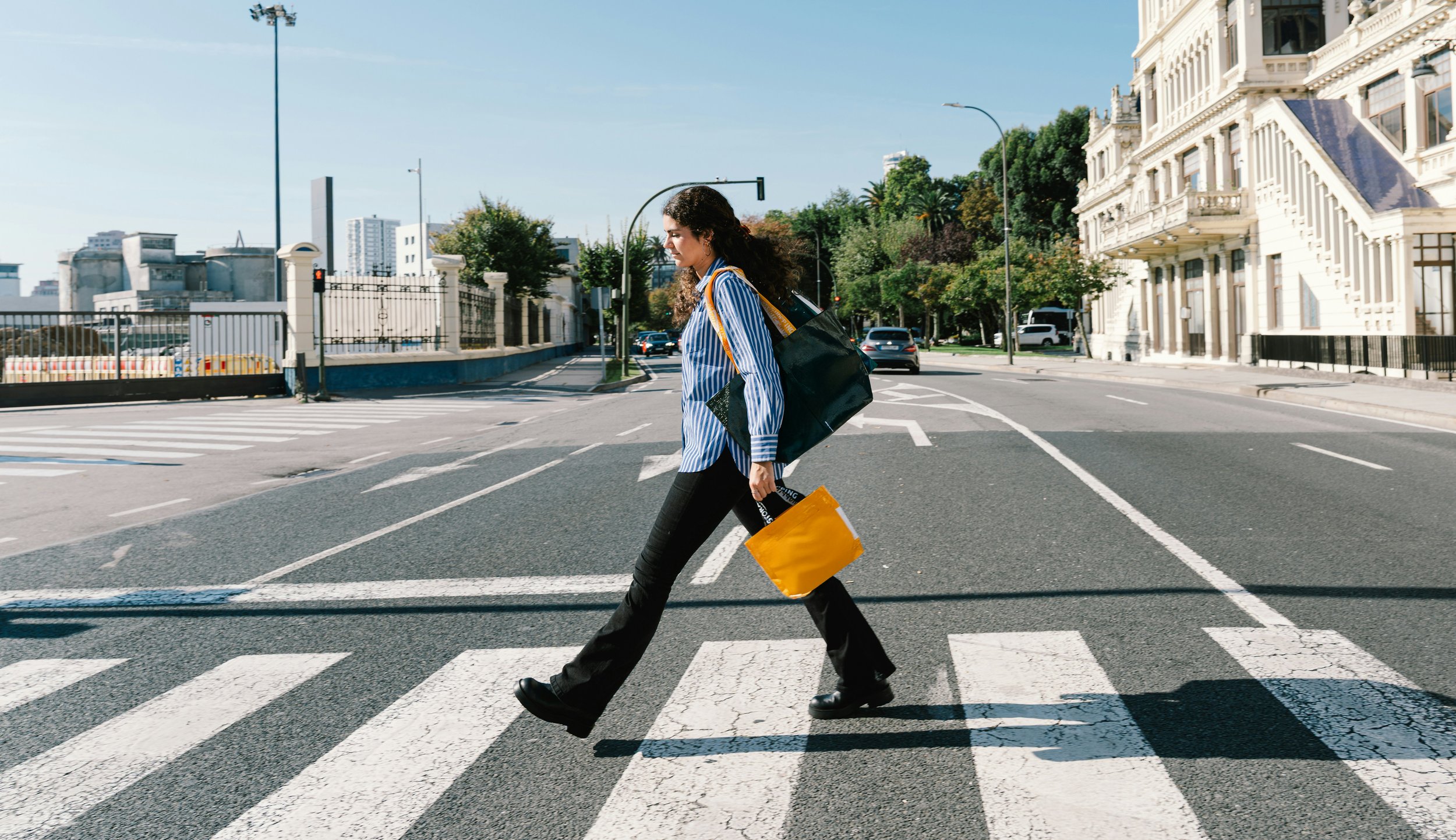
Safe streets projects are usually justified, rightly, by the need to prevent deaths and serious injuries. Crosswalks, refuge islands, protected bike lanes, traffic calming, safer transit stops, sidewalks, lighting, ADA upgrades, and slower design speeds are first and foremost about helping people get where they need to go safely.
But for communities implementing climate action plans, these projects can also be climate projects if local teams plan, frame, and measure them that way.
That connection matters right now. The U.S. Department of Transportation’s Safe Streets and Roads for All program has already provided $3.9 billion to more than 2,000 communities, and FY 2026 activity is still fresh. With approximately $1 billion remaining for the next funding round, municipalities may have opportunities to pursue safe streets projects that also support local climate plan goals.
The challenge is making the climate benefits visible.
The Climate Connection
Transportation is a major source of greenhouse gas emissions for many communities. Passenger vehicle dependence is shaped not only by land use and transit availability, but also by whether people have safe, reliable, and comfortable alternatives for short trips.
When sidewalks are incomplete, crossings feel dangerous, bike routes are disconnected, and transit stops are hard to reach, people are more likely to rely on a personal vehicle even for short daily trips. When protected bike lanes, prioritized crosswalks, shaded sidewalks, safer transit access, and traffic-calmed streets are in place, walking, biking, rolling, and transit become more realistic options.
Safe streets can also support climate adaptation. Street redesign projects can add shade, reduce unnecessary pavement, manage stormwater, improve public spaces, and make corridors safer during extreme heat and flooding. In other words, the same project that helps prevent crashes can also reduce emissions, improve access, and strengthen resilience.
The key phrase is “if local teams plan for it.”
A project that adds a sidewalk may have climate benefits. But those benefits are easier to defend, fund, and track when the project is explicitly tied to a mode-shift goal, vehicle miles traveled reduction strategy, transit-access gap, heat-vulnerability map, stormwater need, or climate equity priority.
What This Looks Like in Practice
Several recent federally supported transportation projects show how safety, access, equity, and climate benefits can be described together.
In Charlotte, North Carolina, the Freedom Drive, Ashley Road, and Tuckaseegee Road corridor project includes Complete Streets, traffic safety, transit-access, and mobility-service improvements. The project includes new pedestrian and bicycle facilities, improved crossings, smart lighting, a new multi-use path, new sidewalk connections, and new or improved mobility hubs serving neighborhoods with less access to transit and active transportation than the citywide average.
The climate connection is direct. By improving access to transit, micromobility, medical offices, urgent care, and corridor destinations, the project supports lower-carbon travel choices while also addressing safety and mobility needs.
In Siler City, North Carolina, the Loves Creek Tributary planning project shows another important connection: safe streets can also be resilient streets. The project combines pedestrian safety improvements with bus stops, streetscape upgrades, stormwater infrastructure, underground utility design, lighting, flood mitigation, water-quality improvements, and safer rail-crossing pedestrian accommodations.
This is a useful model for smaller communities because it shows how a street project can address multiple public priorities at once. A corridor can be safer for walking and biking while also reducing flood risk, improving water quality, and supporting public investment in historically disadvantaged areas.
Philadelphia’s Benjamin Franklin Parkway and Eakins Oval project offers a high-visibility urban example. The project includes multimodal improvements, a new traffic pattern, intersection and signal upgrades, pedestrian connectivity and ADA improvements, traffic calming, and bicycle paths in the outer lanes of the Parkway.
The safety case is clear: reduce pedestrian-vehicle conflicts, simplify intersections, reduce risky lane changes, and lower the risk of crash-related injuries and fatalities. But the project also supports climate-aligned mobility by expanding active transportation options, reducing vehicle dependence, and strengthening separated pedestrian and bicycle connections around a major civic corridor.
In Northwest Arkansas, the Highway 112 Complete Streets Connecting Communities project shows that these benefits are not limited to dense downtowns. The project includes complete streets improvements along approximately 17.5 miles in Benton and Washington Counties, including roundabouts, access management, a raised center median, sidewalk on one side, and a separated multi-use path on the other.
For suburban and growing communities, this type of corridor is especially important. Major roads often determine whether walking and biking are practical everyday transportation options or only recreational activities. When complete streets improvements are added to these corridors, communities can improve safety while also expanding lower-emission access to schools, jobs, services, and daily destinations.
How Climate Teams Can Make the Benefits Visible
Many local governments already have a safety action plan, bicycle and pedestrian plan, transit plan, stormwater plan, urban forestry plan, and climate action plan. The climate benefits of safe streets projects become clearer when those plans are overlaid.
A corridor near schools, multifamily housing, bus routes, high-crash intersections, heat islands, low tree canopy, and households with limited vehicle access can be prioritized not only as a transportation safety project, but also as a climate equity and resilience project.
San Jose’s Climate Smart dashboard provides a useful model for this kind of framing. The city treats Complete Streets as a climate indicator because transportation generates a large share of local greenhouse gas emissions, and reducing vehicle miles traveled is one of the city’s key emissions-reduction strategies. That kind of indicator helps climate implementation staff talk about street projects in terms of measurable climate progress.
The practical next step is to add climate performance questions early in project scoping.
Will the project close a sidewalk or bike-network gap between housing and daily destinations? Will it improve access to transit? Will it add shade or reduce heat exposure for people walking, biking, rolling, or waiting for the bus? Will it reduce impervious surface or add stormwater features? Will it serve households with limited vehicle access? Will the project team count users before and after construction?
These questions do not replace the safety case. They strengthen it.
Safe streets projects should not have to become climate projects to deserve funding. They already deserve funding because people deserve safe mobility. But when local teams identify the climate benefits, they can build stronger grant applications, align departments, justify maintenance commitments, and show residents how one investment can solve multiple public problems at once.
Implementation Takeaways
During project scoping, identify the likely climate pathway: mode shift, vehicle miles traveled reduction, transit access, stormwater management, shade, heat reduction, or some combination of these benefits.
Use before-and-after data where possible, including walking, biking, rolling, transit boardings, vehicle speeds, crashes, and near-miss information.
Map safe streets projects against climate vulnerability, tree canopy, heat islands, flood-prone areas, and households with limited vehicle access.
Include climate-benefit language in grant narratives without weakening the primary safety case.
Coordinate public works, planning, sustainability, transit, parks, and stormwater staff before design decisions are locked.
Safe streets implementation is an opportunity to connect climate plans to visible, practical improvements in people’s daily lives. When municipalities frame these projects well, they can pursue safety funding, advance climate goals, and build streets that work better for everyone.