
For many public entities, climate implementation is no longer mainly about deciding whether the work matters. It is about organizing the staff time, funding, partnerships, data, and public trust needed to act while conditions keep changing.
Why Thinking About Resilience As Being A Heat-Ready Community matters
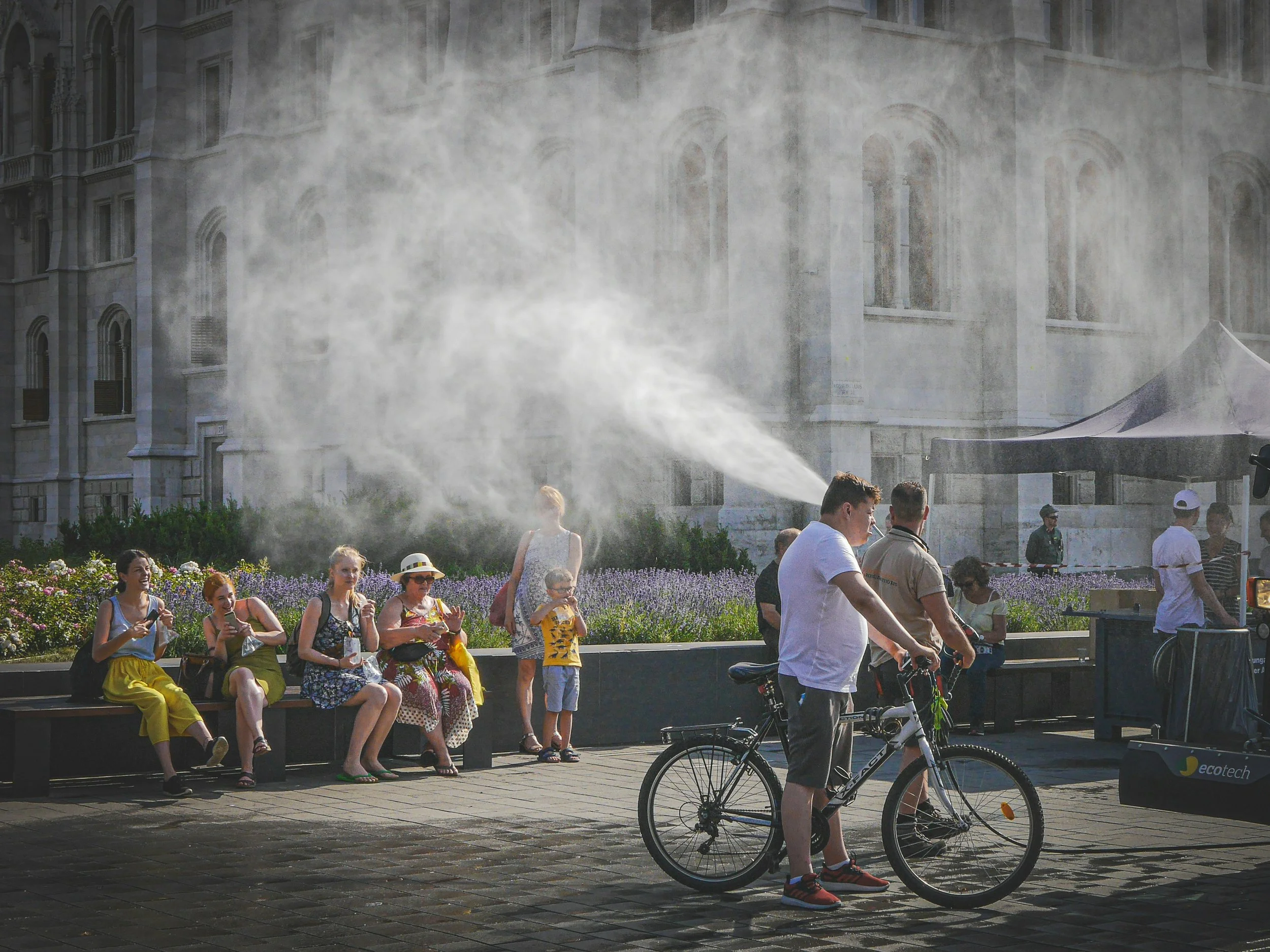
Summer heat is no longer a narrow emergency-management issue. It is a public health issue, an energy affordability issue, a transportation issue, a labor issue, a facilities issue, and a planning issue. Recent city-focused conversations around sustainable cooling and heat resilience emphasize heat mapping, nature-based cooling, passive building design, cooling equipment, and community-centered implementation. The practical question for local governments is how to move from a list of cooling centers to a coordinated heat-ready system.
Cooling centers remain important. They can save lives during dangerous heat. But many communities have learned that simply opening public buildings does not guarantee that residents will use them. People may not know where to go, may not have transportation, may not trust the location, may need to bring children or pets, may need medical support, or may not recognize their own heat risk. A heat-ready system starts with those real barriers.
What a Heat-Ready System Includes
The first component is a shared risk picture. Local governments can combine heat island information, tree canopy and ground cover data, transit access, past emergency calls, and community demographics - like age, disability, housing age, energy burden, rental status, and social isolation - to understand where outreach and cooling resources are most needed. The goal is not to produce a perfect map. The goal is to help staff make better decisions before and during heat events.
The second component is trusted communication. Heat alerts are more effective when they are paired with community messengers, multilingual materials, neighborhood organizations, schools, clinics, senior services, faith communities, and landlords. Local governments should ask: who can reach residents who may not follow city social media, who may not have air conditioning, or who may be reluctant to leave home?
The third component is transportation and access. A cooling center that cannot be reached safely is not a usable resource. Communities can coordinate transit, paratransit, volunteer ride programs, libraries, recreation centers, and community partners. They can also think about distributed cooling: shaded parks, splash pads, extended library hours, resilience hubs, and public facilities with backup power.
The fourth component is facility readiness. Public buildings need clear roles, staffing plans, signage, water, seating, charging access, restrooms, cooling performance, backup power considerations, and coordination with emergency operations. Facilities staff should be part of heat planning, not brought in after decisions are made.
Implementation Takeaways
Start with operations before capital projects. Many communities can improve heat readiness this season by clarifying roles, outreach, hours, transportation, and evaluation.
Design for the residents most likely to be missed. Older adults, renters, outdoor workers, people with disabilities, medically vulnerable residents, people without vehicles, unhoused residents, and households with high energy burden may each need different forms of support.
Connect heat planning to long-term cooling. Tree canopy, cool roofs, shaded routes, building efficiency, public realm design, and housing quality all reduce future heat risk.
Evaluate after each heat event. Track usage, barriers, calls for service, staff observations, resident feedback, and partner feedback. Use that information to improve before the next event.
How Communities Can Start
A practical starting point is a heat readiness tabletop exercise. Bring together emergency management, public health, sustainability, planning, parks, libraries, facilities, communications, transit, utilities, and community organizations. Walk through a forecasted multi-day heat event. Who decides when to activate? Which buildings open? How are residents notified? How do people get there? What happens after hours? Who checks on high-risk residents? What information will be reviewed afterward?
Local governments can also create a heat action one-pager for each department. Public works may focus on outdoor crews and water access. Parks may focus on shade, events, and field closures. Libraries may focus on cooling access and extended hours. Communications may focus on multilingual messages. Sustainability staff may connect immediate response to longer-term climate adaptation and energy strategies.
paleBLUEdot can support this work by helping communities connect climate vulnerability analysis, ground cover data, community engagement, facility planning, and practical implementation. A heat-ready community is not built by one department. It is built by aligning the people who understand hazards, residents, buildings, infrastructure, and services with those who are trusted connections to key vulnerable populations.
References
How can local governments #BeatTheHeat?: https://globalcitieshub.org/en/2026-cities-beat-the-heat/
Extreme Heat and Community Resilience Program: https://www.lci.ca.gov/climate/icarp/grants/extreme-heat-community-resilience/
Urban Heat Resilience: https://www.planning.org/knowledgebase/urbanheat/